
Chimney Sweep in Campbell, CA
Call (408) 850-1659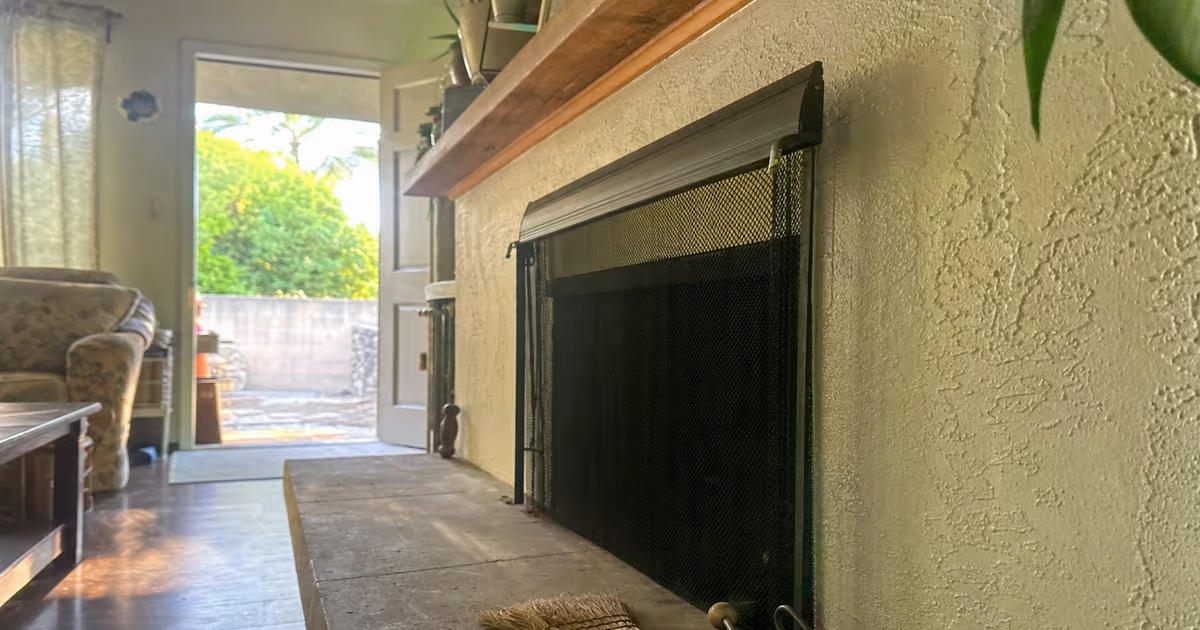
What the work looks like on a Campbell chimney
The visit starts at the hearth, not the roof. Drop cloths go down. The opening gets sealed and put under vacuum. Brushes and rods work the flue from below or above, depending on the crock and the pitch. Then a camera runs the liner joint by joint. Last comes the roof: crown, cap, flashing, mortar joints. Findings get photographed, not described from memory.
Campbell is a compact city wedged between San Jose and Los Gatos. It was orchards and canneries before it was subdivisions. Most of the housing is 1940s-60s bungalows and ranch homes. The fireplaces are small brick boxes. They were built fast, with thin masonry by today's standards.
Near downtown that thin masonry shows. Crowns are often a skim of mortar that has cracked through. Many stacks never had a cap at all. Winters here are short and mild, so the flue may be barely sooty while the top of the chimney is the part failing.
Gas-log conversion is common. Flues often sit unused for decades until a remodel or a sale forces the question. Townhome and condo infill uses prefab metal fireboxes. When those refractory panels are discontinued, patching is a waste and we say so.
Chimney Sweep services in Campbell
Same-day service available in Campbell, CA. Call to check availability.
Call (408) 850-1659Frequently Asked Questions
- The glass doors on our old brick fireplace are pitted and sticking — repair or replace?
It depends on what's actually failed. On the small brick fireboxes in Campbell's 1940s–60s bungalows and ranches, the doors are often original or a decades-old replacement, and what wears out first is the track, the hinges, and the rope gasket around the glass. Those pieces can sometimes be freed up, re-gasketed, and re-glazed. What we won't try to save is a frame that's warped from heat or has rusted through at the bottom rail, because it will never seal against that masonry again. The other thing to check is fit: a lot of these older openings are undersized or slightly out of square, so a replacement set may need to be ordered to the opening rather than pulled off a shelf. We'll measure and tell you which side of the line yours falls on before anything is ordered.
- Can you come out the same day?
Sometimes, though it's not something to count on. Campbell is compact and we're already working between San Jose and Los Gatos most days, so a cancellation nearby can often be filled the same afternoon. Same-day is most realistic for an inspection or a look at a specific problem — a smoking fireplace, a door that won't close, water coming down after a storm. Full sweeps and any masonry work like a crown or cap install get scheduled, since they need materials and cure time.
- What usually turns out to be wrong with chimneys around here?
Three things come up over and over in the older downtown-area homes. First, missing caps — a lot of these chimneys were built without one, so rain has been going straight down the flue for decades. Second, deteriorated crowns; the thin mortar wash on top cracks, water gets into masonry that wasn't thick to begin with, and it works its way down. Third, firebox refractory: the panels or firebrick behind the grate crack and the joints wash out, which is common in fireplaces that were used hard for a few decades and then barely at all. On the newer townhome and condo infill with prefab metal fireboxes, the issues are different — usually deteriorated panels, missing components, or a chase cover that's rusting.
- What makes one Campbell job cost more than another?
Access and construction, mostly. A straightforward sweep on a single-story ranch with a short chimney is at the low end of what we do. The number climbs when there's masonry involved — a new crown poured on a thin, older chimney takes more prep than a simple cap install, and refractory repair depends on whether we're patching joints or replacing panels. Roof pitch and how much of the chimney is above the roofline matter too. Prefab units in the newer townhomes can go either way: the sweep itself is quick, but if a part is required, it has to match the manufacturer, and that drives the cost more than our labor does. We look at yours and explain what's driving the number before you decide.
- We converted to gas logs years ago and hardly use it — do we still need a sweep before we sell?
Usually yes, and it's one of the most common calls we get in Campbell. A flue that's sat mostly unused for twenty or thirty years isn't clean — it collects debris, nesting material, and mortar that's spalled off the inside, and with no cap the rain has been adding to it. Buyers' inspectors flag chimneys routinely here, and the findings tend to be the crown and the firebox rather than creosote. Getting it swept and looked at before the listing gives you the chance to handle it on your own timeline instead of during a repair negotiation. The same applies if you're remodeling and the fireplace is staying.